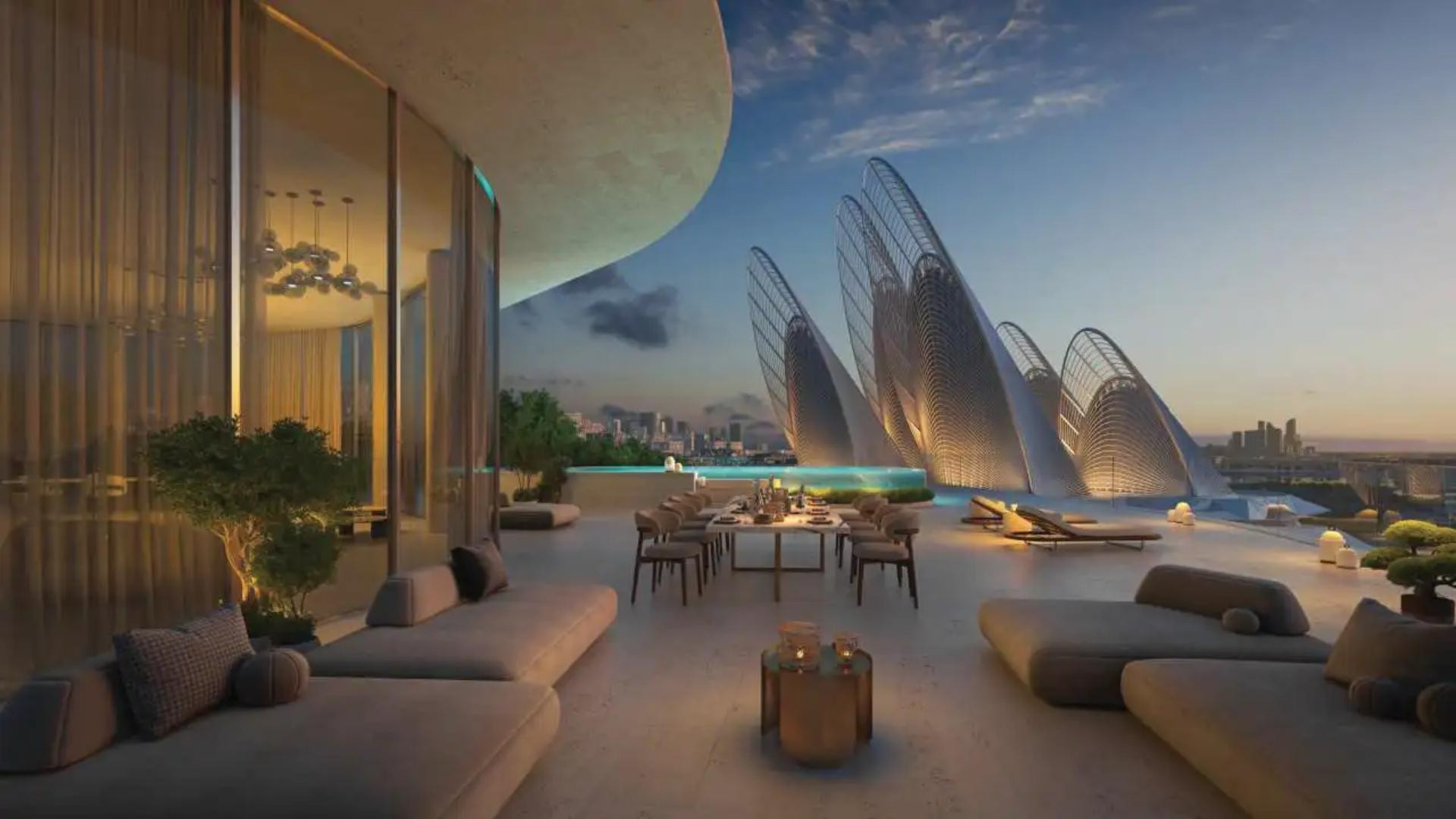
But in real estate cycles, “too early” is often where the largest gains are made—*if* the fundamentals are right.
Al Naseem Villas by Modon, in Hudayriyat Central, sits precisely at that intersection: early in its cycle, but backed by heavyweight planning, government support, and a very specific positioning in Abu Dhabi’s long-term story.
For some investors, Hudayriyat could turn out to be the most profitable villa investment they ever make.
For others, it could be completely wrong for their strategy.
This article breaks down the macro context, location, product, layouts, pricing and investment logic behind Al Naseem, so you can decide which side of that line you’re on.
1. Advisor Perspective – Why This Analysis Exists
The analysis below comes from day-to-day work with international families buying and holding high-ticket villas and branded residences across the UAE.
Over recent years, capital has flowed from Palm Jumeirah, Emirates Hills and Dubai Hills into Saadiyat, Yas and, increasingly, Hudayriyat. Families making these moves are not buying for one or two years; they are planning ten, fifteen, even twenty-year horizons.
That means the usual marketing messages are irrelevant. What matters is:
* Where the macro cycle is
* How supply and demand will look five to ten years out
* Whether the villa layouts, locations and plot sizes actually work for long-term living
This is the lens applied to Al Naseem.
2. The Macro Context: Why Abu Dhabi Matters Now
Most people still look at the UAE almost exclusively through a Dubai lens.
* Dubai opened its freehold market in *2002* and has had more than twenty years to price in global migration, infrastructure, tourism and international attention.
* Abu Dhabi’s freehold story is far newer. The emirate only opened meaningfully to freehold ownership *around 2019*.
Between *2014 and 2024, Abu Dhabi’s population grew from roughly **2.7 million to about 4.1 million—close to **50% growth in a decade*.
Now compare that to upcoming supply:
* Dubai’s residential pipeline to *2029: ~**300,000* new units
* Abu Dhabi’s pipeline to *2029: ~**33,000* units, of which ~*8,000* are concentrated on Yas Island
So you have:
* A capital city
* A larger underlying economy
* Strong concentration of sovereign wealth and financial firms in ADGM
* Significant population growth
…but only a fraction of Dubai’s future housing supply.
This imbalance is what makes early-cycle masterplans like *Hudayriyat* so interesting. You are not buying at the end of a very mature story. You are buying close to the beginning of one.
3. Hudayriyat in Context – Where Al Naseem Actually Sits
Hudayriyat is essentially Abu Dhabi’s answer to a hybrid of *Bluewaters* and *Palm Jumeirah: a lifestyle, sports and villa island directly opposite **Al Bateen*, one of the city’s most established coastal areas.
From *Al Naseem*, approximate driving times are:
* ~10 minutes to *Al Bateen*
* ~15 minutes to the *Corniche*
* ~20 minutes to *Saadiyat*
* ~25 minutes to *Yas Island*
So this is *not* an isolated desert suburb. It is one bridge away from the core city.
The island is being developed almost entirely by *Modon*, a heavily government-backed master developer. Modon is not simply releasing villa plots; it is building:
* A complete sports and lifestyle district
* Surf Abu Dhabi and a major surf park
* A velodrome and cycling network
* Parks, marinas and hospitality zones
* Then layering villa communities into that ecosystem
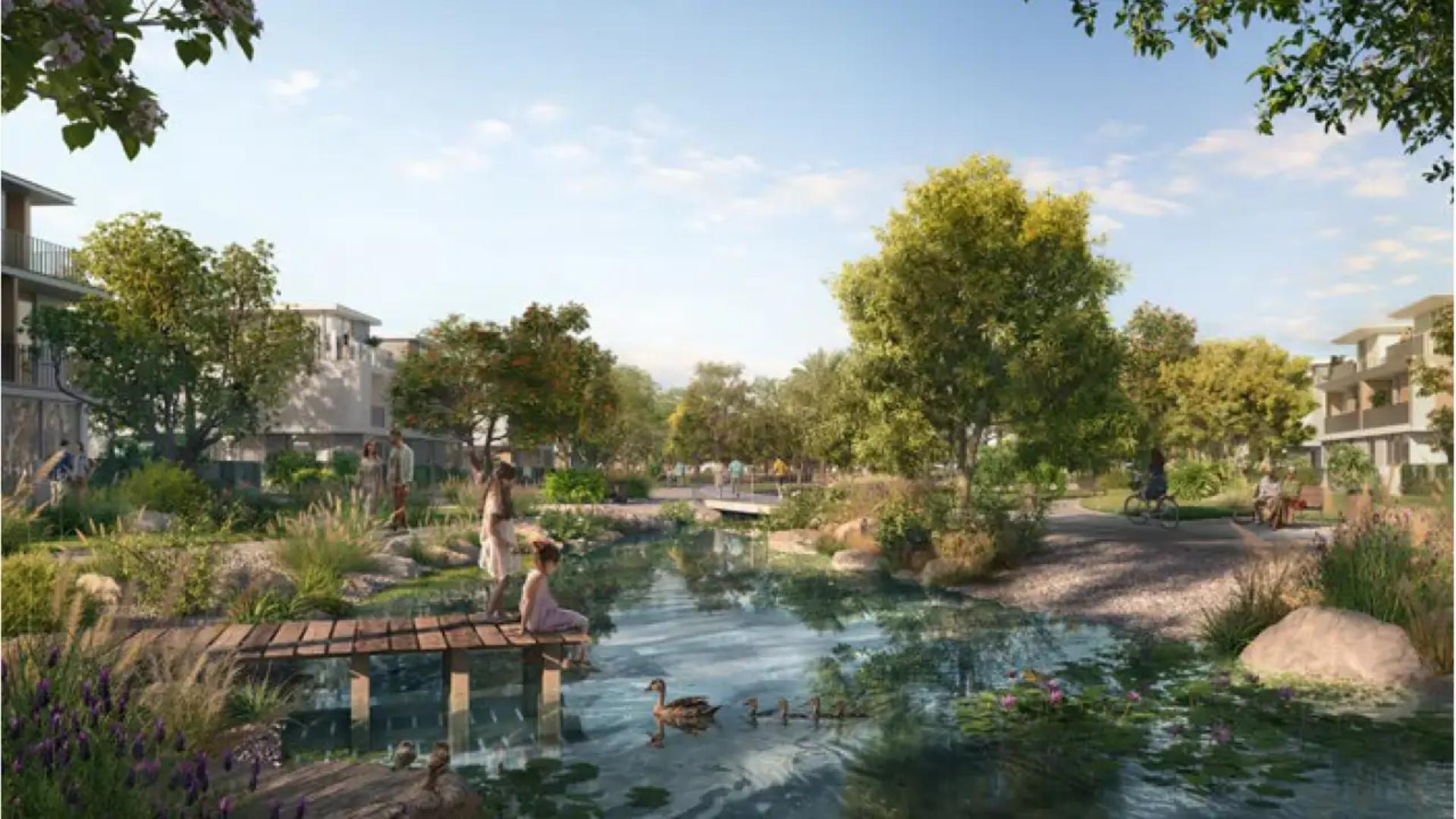
Within Hudayriyat, *Hudayriyat Central* is the more residential, family-oriented district. Inside this district, set across hillside slopes and canal edges, is *Al Naseem*:
* The *six-bedroom clusters* sit higher on the slopes, with better breezes and partial marina and skyline views.
* The *four-bedroom villas* sit lower, with wider rectangular plots and deeper gardens but less elevation.
Before even discussing floor plans, the positioning is clear: *a low-density villa enclave inside a flagship lifestyle island*, not an entry-level extension of the city.
4. What Al Naseem Actually Is
Al Naseem is one of Modon’s flagship villa districts within Hudayriyat Central. It offers *4-, 5- and 6-bedroom villas* with approximate plot sizes of:
* ~*750 m²* for four-bedroom villas
* ~*930 m²* for five- and six-bedroom villas
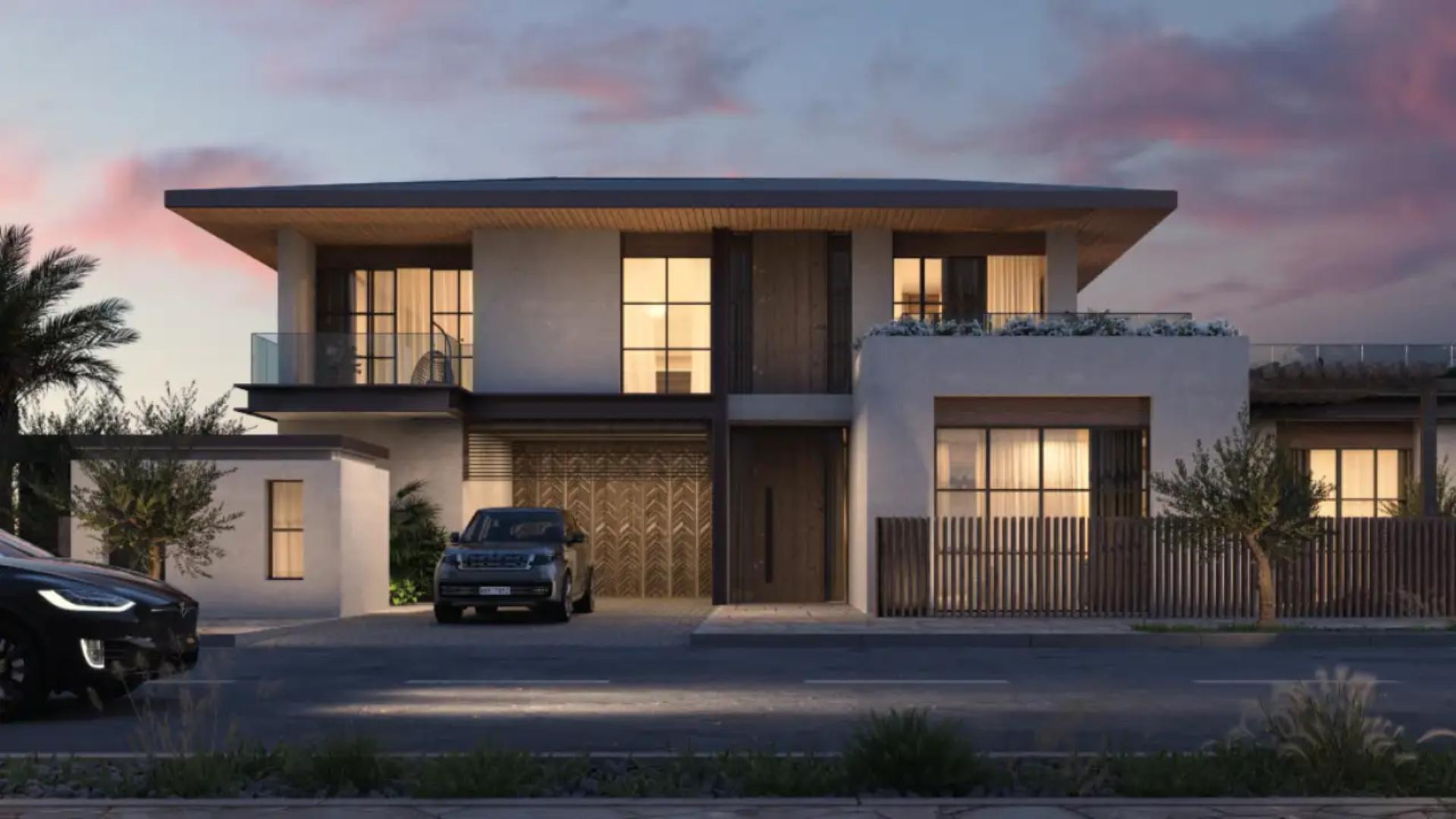
Architecturally, Al Naseem breaks from the typical “boxy” villa grids common in many UAE suburbs. The design language blends *Mediterranean* and *Californian contemporary* influences:
* Travertine and warm stone
* Timber and metal accents
* Full-height glazing
* Deep terraces and pergolas
* Strong indoor–outdoor integration
* Large central courtyards
The result feels much closer to a *hillside resort neighbourhood* adapted for long-term residential living than to a typical mass-market masterplan.
5. Floor Plan Analysis – How the Villas Actually Work
For end-user families and long-term investors, the real value sits in how the villas function day-to-day.
### Six-Bedroom Villas – Multigenerational Flagship
* Plot: ~*930 m²*
* Built-up: ~*560–620 m²*
Key features:
* *Dual kitchens*: a show kitchen (~3.5 × 5.5 m) plus a secondary working kitchen (~3 × 3 m). For Gulf families and frequent entertainers, this is almost non-negotiable.
* Multiple living zones:
* Formal majlis (~4.9 × 8.5 m) with its own powder room
* Family living area (~4.9 × 6.8 m)
* Separate family lounge (~3.5 × 4.5 m)
This creates three distinct social environments within one home: formal reception, everyday family space and a more private retreat.
The *central courtyard* is a defining element. It brings light into the core, improves airflow and visually connects the wings of the villa—an approach common in high-end Mediterranean and Californian homes but rare in Abu Dhabi stock.
Staff accommodation is correctly specified and separated, with both an en-suite maid’s room and a driver’s room.
Upstairs, you typically find *two master bedrooms*, both with generous walk-in wardrobes, and all other bedrooms are en-suite with walk-ins. This level of specification is usually associated with the upper tier of Saadiyat Lagoons or Nareel Island.
For multigenerational households, these layouts allow three generations to live under one roof without sacrificing privacy.
### Five-Bedroom Villas – Flexible Luxury
The five-bedroom villas share the *930 m²* plot size, with built-up area around *560 m²*, and mirror much of the six-bed layout:
* Dual kitchens
* Formal and family living areas
* Central courtyard
* Staff quarters
The key difference is a *flex room* that can become:
* Home office
* Gym
* Cinema
* Playroom
* Additional bedroom
The first floor is slightly smaller, and you lose the double-master configuration. For some GCC families this may be a compromise; for many European and Asian buyers, it’s a very comfortable balance of space and flexibility.
### Four-Bedroom Villas – The Entry Point
* Plot: ~*750 m²*
* Built-up: ~*490 m²*
Still offering:
* Large master suite
* Separate majlis and family living
* Double kitchens
* Generous terraces
* Private pool
The trade-offs compared with larger types are:
* No driver’s room
* Slightly smaller secondary bedrooms
* Shallower garden, given the smaller plot (approx. 25 × 30 metres)
For many Western and Asian expatriate families, this is likely the *sweet spot*: substantial villa living, pool and garden without crossing into ultra-prime ticket sizes.
6. Architecture and Facades – Why It Matters for Resale
Al Naseem provides two main facade options on a similar structural skeleton:
1. *South Californian style*
* Sloped roofs
* Warmer timber tones
* Relaxed, Mediterranean character
2. *Modern Contemporary*
* Flat roofs
* Clean, minimal lines
* Darker metal details
Interiors are consistent across both:
* Full-height glazing
* Timber screens and pergolas
* Travertine-effect tiles
* Brass/gold accent details
* Large terraces and outdoor living areas
From a resale perspective, two elements stand out:
* Families can align the external look with their tastes without commissioning a full custom build.
* The *contemporary facade*, in particular, is likely to photograph and present very well in future listings, which often has a real impact on perceived value.
This level of architectural choice and refinement at these price points is still rare in Abu Dhabi.
Pricing and Value Positioning Using the latest brochure data as a guide:
* *5-Bedroom villas*
* Price: ~*AED 8.94M–9.57M*
* Built-up: ~*8,411 sq ft*
* Approx. *AED 1,063–1,138 per sq ft*
* *6-Bedroom villas*
* Price: ~*AED 9.9M–11.38M*
* Built-up: ~*8,425 sq ft*
* Approx. *AED 1,175–1,352 per sq ft*
Compared to other Abu Dhabi villa communities:
* *Saadiyat Lagoons (6-beds): ~AED **1,200–1,450 psf*
* *Saadiyat Beach Villas (older stock): ~AED **1,050–1,400 psf*
* *Al Gurm: ~AED **1,600–2,200 psf*
* *Nareel Island: ~AED **1,800–2,500 psf*
At roughly *AED 1,060–1,350 per sq ft* on very large plots within a flagship new island, *Al Naseem sits at the lower end of the top-tier spectrum*.
The core insight is straightforward: You are effectively getting *Saadiyat-level architecture and plot sizes* at a *30–40% discount*, largely because Hudayriyat is still early in its cycle.
8. Investor Logic – Where Numbers and Narrative Meet
Five major themes define Al Naseem from an investment standpoint:
1. Early-Cycle Appreciation Potential
Hudayriyat as a masterplan is perhaps *10–15% complete*. Historically, early buyers in comparable schemes—such as Saadiyat Lagoons—have seen villas move from around AED 6.5M at launch to 10–12M in under two years as infrastructure, schools and roads matured.
2. Government-Backed Developer
You are not relying on a small private developer. *Modon* is state-backed and controls the surrounding land, the sports district, hospitality pipeline and overall island branding. This significantly de-risks execution and long-term vision.
3. Lifestyle Anchors
Surf Abu Dhabi, the velodrome, Marsana waterfront, cycling network and future sports hotels are not temporary attractions. They are long-term *demand anchors* for both rentals and resale.
4. Low-Density, Villa-Only Positioning
In many UAE islands, towers eventually appear behind villas, changing the feel and density of the community. Hudayriyat’s central hills are planned as *low-rise, low-density villa districts*, which protects the character of the area.
5. Structurally Undervalued Land
A *930 m²* plot with this specification at these prices is extremely hard to replicate in today’s Dubai. As land and construction costs rise, such plot sizes tend to become structurally scarce, supporting long-term capital values.
9. Pros and Cons – A Balanced View
*Key strengths:*
* Very large plots for the price bracket
* Dual kitchens and multiple living rooms
* Proper, separated staff accommodation (maids + drivers in larger types)
* All bedrooms en-suite with walk-ins in flagship layouts
* Genuine courtyard architecture and strong indoor–outdoor flow
* Direct access to a growing sports and lifestyle ecosystem
* Early-cycle pricing in a government-backed mega-project
*Key constraints:*
* Villas are hillside and canal-oriented, not direct beachfront
* Currently a single main entry/exit to Hudayriyat (likely to improve over time)
* More villa phases will be released in future, so this is not the only stock on the island
* No international hotel brand attached to this specific community, which some UHNW buyers like as a psychological anchor
The essential question is tolerance for *early-cycle risk in exchange for runway*. This is not a short-term flip product; it is a long-term hold inside a developing flagship island.
10. Final Verdict – Should You Buy in Al Naseem Now?
If *Saadiyat* represents Abu Dhabi’s mature cultural and beachfront play, and *Yas Island* represents the entertainment and family attraction play, then *Hudayriyat—and specifically Al Naseem—represents the **sports, lifestyle and hillside luxury play with the most remaining upside*.
* The *six-bedroom villas* are the true flagship product for multigenerational GCC and regional families who prioritise space, privacy, staff accommodation and elevated views.
* The *four-bedroom villas* are likely the strongest value proposition for European and Asian expatriates who want a genuine villa with a pool and large garden, without entering ultra-prime ticket territory.
For investors who feel that Dubai’s best villa communities have largely priced in their upside—especially those seeking the combination of *water proximity, villa typology, city access, strong masterplanning and government backing*—Al Naseem is one of the few remaining places in the UAE where all five align at what is still an early-cycle price point.
Whether Hudayriyat is “too early” or “exactly on time” depends entirely on your risk tolerance, holding period and overall portfolio strategy.
But purely from a macro, planning and product perspective, *Al Naseem deserves to be on the shortlist for any serious long-term villa investor looking beyond Dubai.*